


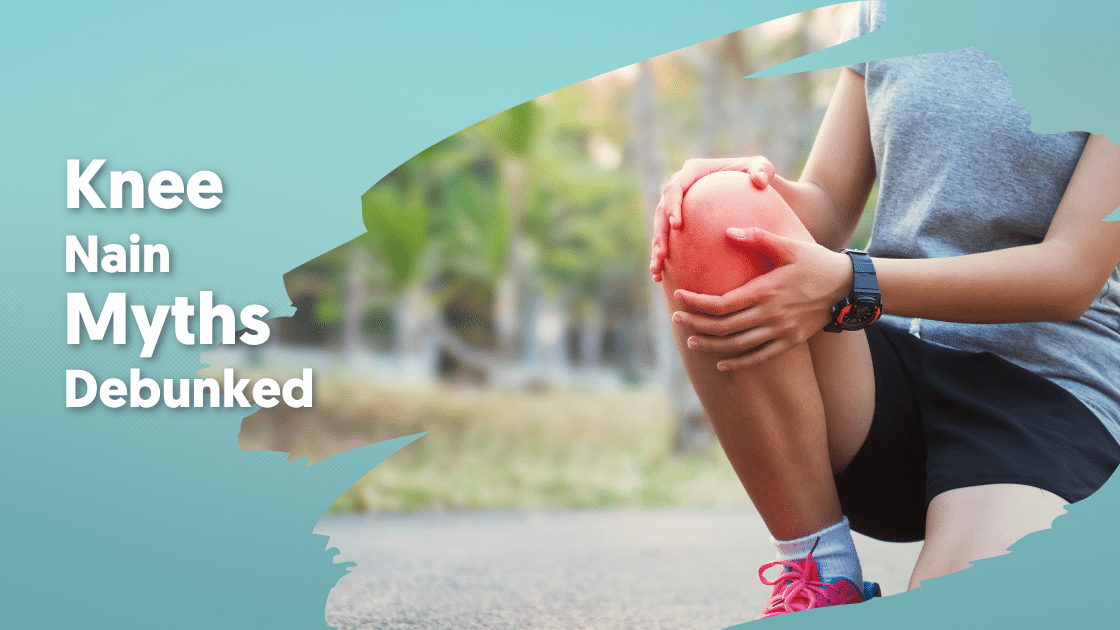


Knee pain has a way of turning simple tasks into annoying little challenges. Things like walking the dog, going up and down stairs, and even getting out of the car are suddenly a huge undertaking. And if you’ve ever tried Googling it, then you’ve probably come across a ton of advice. Some is helpful, some outdated, and some is just flat out wrong. So, let’s take a second and clear things up. Here are the most common knee pain myths, what actually helps, and what might secretly be making things worse.
Myth #1: Rest Is The Best Cure
The Truth: Rest is a tool, not a long-term solution.
Sure, rest can be a good thing, especially right after an injury or flare up. It gives your knee a chance to stop being so irritated and actually settle down. But your body isn’t meant to stay still. It needs movement so it can stay healthy and work properly.
Once you stop moving, your muscles start to weaken surprisingly fast. Your quadriceps (thigh muscles) play a huge role in stabilizing your knee, and even a short period of inactivity can make them lose their strength and responsiveness. That means when it’s time to be active again, your knee has way less support than it use to.
Instead of laying around and doing nothing, you should try a slightly more active form of recovery. Things like walking or lower impact activities (swimming, biking, etc.) are great because they let your knee heel while still being functional. Movement is what will prevent your knee from getting stiff, and going days or weeks without activity will only make it harder to get moving again.
Myth #2: If It Hurts, Don’t Use It
The Truth: Pain is a signal, but not necessarily a sign to stop.
Your brain uses pain to help protect you from danger, but it doesn’t always get the threat level exactly right. You see, when you have chronic or recurring knee pain, your body becomes more and more sensitive, so you might feel pain even if there’s nothing serious happening. And then if you stop using your knee because of the pain, that only reinforces the sensitivity. After a while, your brain will actually start to associate normal movement with danger, which lowers your tolerance for any kind of activity.
The key is to learn the difference between pain and discomfort. Mild soreness and even a bit of stiffness during activity is usually fine, especially if it eases up after you’re done. You just have to figure out how to stay in that manageable range and gradually build up your tolerance. You’ll know you’re on the right track if the achiness remains stays the same or improves. If you get a sharp spike of pain during your activity or your pain is worse the next day, it’s time to ease up a bit.
What’ll things worse is being so afraid everything’s going to make your knee hurt that you don’t do anything at all. Thinking like that will only create more problems for yourself in the long run. So just try to remember, the more you can stay moving, the stronger you’ll be and more confident you’ll feel.
Myth #3: Running Ruins Your Knees
The Truth: Running isn’t the villain, unless you absolutely hate running. Just kidding. But in all seriousness, running itself isn’t the issue, not easing into it is the problem.
Now, this myth has been around forever, but there actually isn’t any evidence that runners have worse knees compared to non-runners. In fact, it’s actually the opposite. Research consistently shows that people who run regularly have healthier knee joints.
Your knees are strong- they’re built to handle a lot of force. When you walk, there’s 2 to 3 times your body weight going through your knee joint. Running increases that up to around 4 to 5 times! Yes, that is a lot of force, but your body adapts to that stress when it’s introduced gradually.
With that in mind, you’ll want to be smart about how you train. Slowly increase how far you run, change up your intensity, and most importantly, pay attention to how your body responds. If you can add in strength training as well, that’ll be a huge bonus for your joint control and shock absorption. Just make sure to avoid being a weekend warrior, aka doing nothing during the week then jumping into intense activity on the weekend. That’s just setting yourself up for disaster.
Myth #4: Knee Pain Means You’re Getting Old
The Truth: Age changes things, but it’s not the end of the world for your knees.
Everything wears down over time: your muscles, bones, cartilage, all of it. But pain isn’t simply about getting older. It’s actually more about how you use (or don’t use) your body.
People in their 20’s and 30’s usually deal with knee pain because of muscle imbalances, poor movement patterns, or sudden changes in activities. But then you see people in their 60’s and older who stay active and are relatively pain-free because they’ve maintained their mobility and strength. So when it comes down to it, it’s more about your habits and not just your birthday.
Instead of seeing your knees as something that will inevitably wear out, think of them as something you can prepare and train. Focus on making your glutes, quads, hamstrings, and calves strong. Work on improving your balance and mobility. Don’t just settle for a fate of living in pain and do nothing about it. People with that kind of mindset usually end up being less active and actually speed up the aging process that they’re so worried about in the first place.
Myth #5: You Should Stretch More
The Truth: Flexibility matters, but strength is more important.
Tight muscles can make your knee uncomfortable, but most of the time it’s not because your muscles are too tight. If anything, the real issue is because they’re not strong or coordinated enough to deal with whatever you’re trying to do.
Stretching alone won’t build the resilience that you need. Sure, it might relieve some your tension temporarily, but that’s it. It doesn’t improve your knees ability to handle the demands of walking, going up and down stairs, or any of your other daily activities.
The best thing you can do is take a more balanced approach. Keep stretching if it feels good, but try adding in some strengthening exercises too. Things like squats, lunges, and step-ups will help make your muscles stronger so they can support and stabilize your knee better. If you only rely on stretches, you’re pretty much just dealing with one piece of the puzzle and ignoring the rest.
Myth #6: Knee Braces Fix The Problem
The Truth: Braces help provide support, but they don’t rebuild.
There are plenty of different kinds of knee braces out there. The whole point of them is to give you a sense of stability and help with certain activities. They’re especially useful after you get injured, have a surgery, or during flare ups.
At the end of the day, knee braces are just passive support. They don’t strengthen your muscles or make your movement better. But more than anything, they don’t address the root cause of your pain, which is a problem.
Braces do have their place though, so use them strategically. Think of them more as temporary assistance, not a permanent crutch. Use them while you build up the strength around your knees so your body can eventually take over that job again. It’s important that you don’t become overly reliant on the brace and skip rehab because that’ll only make your muscles and joints weaker in the long run.
Myth #7: You Need Surgery To Fix Knee Pain
The Truth: Sometimes surgery is necessary, but not very often.
It’s easy to assume that if there’s structural issues with your knee, then you automatically need surgery. How else can you fix it, right? But a lot of common knee problems, like arthritis or irritated tendons, actually respond very well to physical therapy.
At PT, you’ll learn how to strengthen your muscles and improve your mobility while still maintaining your normal activity levels. Going the conservative route like this is usually more successful and doesn’t have all the risks and long recovery time that comes from invasive surgeries. All it takes is hard work and some consistency.
Even if you end up going the surgery route, there’s no guarantees it’ll fix the underlying cause of your knee pain. Plus, you might still have the same issues afterwards too. And let’s be honest, what do you have to lose? Do you really want to jump straight to the invasive “solution” without trying conservative care first?
So, What Actually Helps?
With all that said, your knee pain comes down to a few key things:
- Consistent movement. Your knees thrive on regular use, so stay active.
- Gradual progression. Don’t suddenly jump into a new or intense activity. Take things one step at a time.
- Strength training. Getting stronger is never a bad thing, especially for your quads, glutes and hips.
- Body awareness. Figure out your limits without being afraid of movement.
- Patience. Possibly the most difficult of them all, but real improvement takes time. You just have to trust the process.
The Bottom Line
Knee pain isn’t just about wear and tear, damage, or trauma. More often than not, it’s about capability- what can your knee handle vs what you’re asking it to do. Luckily, your knees are capable of a lot and that’s something you can work towards. So, ignore all the outdated, overcomplicated advice and focus on movement, strength, and consistency. You don’t need your knees to be perfect, you just need the right kind of support, day after day.
Click here to learn more about the most common knee injuries and what you can do if you ever experience one.
About The Author